
Self Balancing Scooters Frequently Asked Questions
Time and time again we’ve been asked the same questions about Swegways/Self Balancing Scooters/Hoverboards. So, we’ve decided to compile a list of questions and answer them for you!
Read on:
What is the best IO Hawk alternative?

Well, the IO Hawk is an excellent swegway, but we think it’s a little overpriced. Something like a WallyGadgets Drifting Scooter will cost A LOT less, and be absolutely comparable to the IO Hawk.
What is a Swagway?
A swagway or swegway is just yet another name for the self balancing scooter. Swagway is also a brand name. Because of a lawsuit with Segway, they changed the name to Swagtron. Read more about the Swagtron here.
How much does a Swagway cost?

Swagway prices range from $289 to around $1500. The differences? You pay for better materials, batteries and motors, but also largely for the brand. Make sure you make the right choice when buying!
What is the Swagway’s top speed?

Depends on the model. Usually a Swagway’s top speed is around 6.2 Mph, with some models going as fast as 10 Mph.
What is the fastest self balancing board?
Based on our research, the top-speed specs don’t really matter that much in a real-world scenario. 6.2Mph feels really fast on a self balancing board, and the real limiting factor is how comfortable you feel riding it on whatever terrain you’re on. That’s why we’ve reliably gotten the fastest speed out of our 10-inch tire self balancing board: with beefier, inflatable tires, you’re gonna feel more comfortable riding over cracks and imperfection on the road. It still takes guts, but 10Mph is totally doable a 10-inch wheel board.
Where can I find a Swagway for sale?
Here is a good start if you want the cheapest swagway on the market. In any case, be sure to read our buying guide.
What is the weight limit on an electric hoverboard?

Again, it depends. The Hovertrax supports up to 220lbs, while the IO Hawk supports up to 280lbs. Check out our Hoverboard Weight Limit Chart for the weight limit of other self balancing scooter models.
What is the Hovertrax?
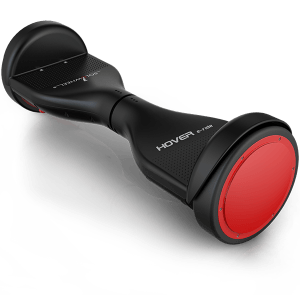
It’s simply another self balancing scooter / swagway. It features a different design than the IO Hawk and all its clones, and it’s got some really neat features such as an App that lets you check your board’s status and stats, as well as smart battery management, which will make the battery last longer.
Recently, Razor, the scooter company, has purchased the patent to this product, and has created the Razor Hovertrax, which is, essentially, the same 6.5 inch wheel design we’ve seen everywhere else.
Hovertrax vs IO Hawk?
Well, it depends on your needs. The maximum weight capacity of the Hovertrax is pretty low, and, for instance, a 6’2″ guy like me, can’t ride the Hovertrax (I’m 205lbs — just above the weight limit). Also, the Hovertrax is around 5 times the price of a IO Hawk knock-off like the eRover, the MonoRover, the WallyGadgets, etc. which we’re not sure is worth the extra perks.
Are Swagways waterproof?

We have a full post about that (TL;DR they’re only splash proof).
Is there an off-road hoverboard? Can hoverboards go off-road?
If you actually want an off-road hoverboard, the best you can do is get a 10-inch wheel swagway, which is gonna fare nicely enough on grass and gravel. That said, even that’s not really an off-road option. Instead, you might want to look into an Offroad Personal Electronic Transporter (which is just a fancy name for an off-road segway).
FreeFeet vs IO Hawk?
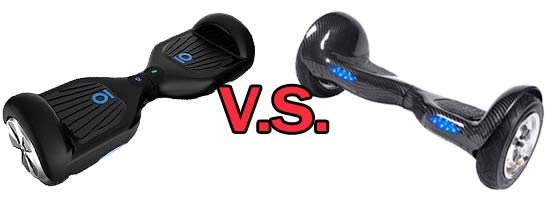
We love the FreeFeet/Yinshan, as it features those 10-inch inflatable tires which allow us to go pretty fast, and not stress out about every single crack in the pavement. Also, the price is much lower than that of an IO Hawk, and only slightly higher than that of a generic self balancing scooter from China. So, we’d say the FreeFeet wins this one.
FutureFoot vs IO Hawk?
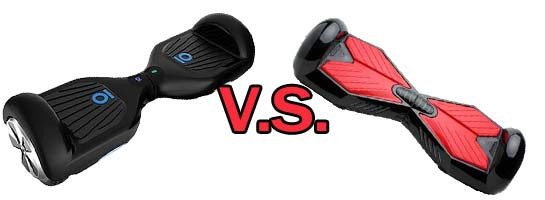
The FutureFoot features a different design than the IO Hawk. The footpads are kinda shaped in an X. In terms of specs, it’s pretty similar, but we recommend the IO Hawk over the FutureFoot, as we’ve had issues with the build quality on the Future Foot. Also, the FutureFoot’s “wider” shape makes your feet rest in a somewhat unnatural position. So, this time, the IOHawk wins.
Should I get a one wheel self balancing scooter or a two wheel one?
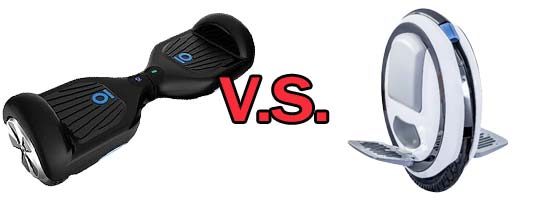
We’ve tried the one wheel self balancing scooter. The Airwheel and the Ninebot, to be precise. The self balancing unicycle is very different to ride than a two wheel self balancing scooter. It’s way more involved, it takes more practice to be able to ride it confidently, and it’s significantly heavier than an hoverboard. The nice thing about a one wheel scooter is that the wheel is so large that you can go up curbs relatively easily. That said, we’d take a 10-inch tire self-balancing scooter over a one wheel self balancing scooter any day of the week: the unicycle gave us bruises and we couldn’t ride it for very long before calves and ankles were sore. Of course, we have met people who prefer the unicycle, but the vast majority of people go with a 2 wheel board eventually.
That’s it for now folks, keep sending us your questions, and we’ll do our best to answer them in future posts!
Leave a Reply